The plate is hardened, which matters because the mounting face carries the chuck's clamping load and gets re-machined at the register. At 65 HRC the register can be trued in place without the surface smearing, but it also means the part cannot be drilled or modified with ordinary tooling.
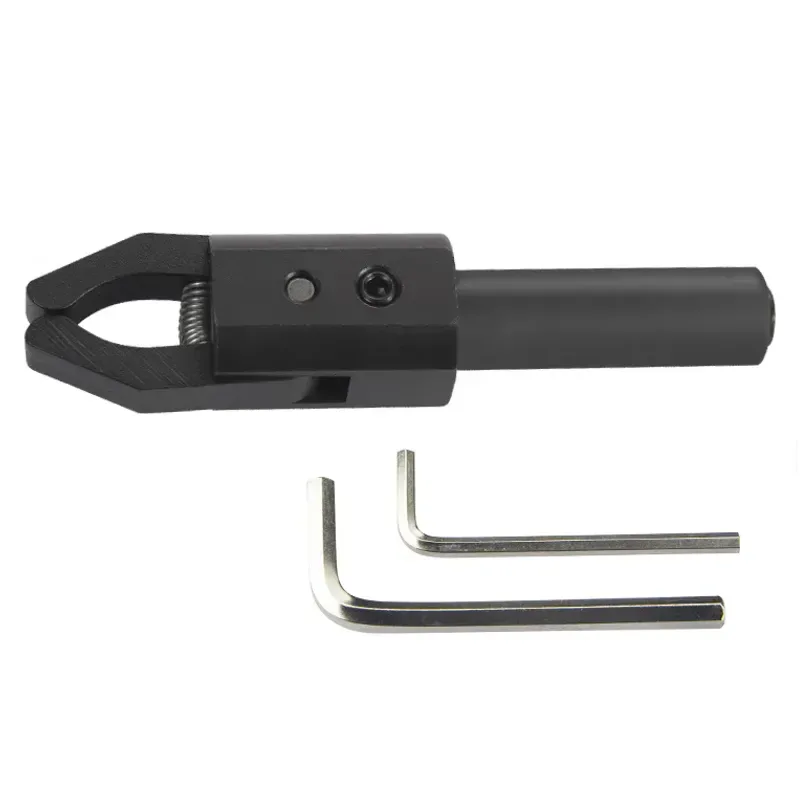 FIG. / PRODUCT VISUAL / 5 VIEWS
Product images are shown for technical review; final compatibility is confirmed before quotation.
TBK-CTH-1601657877924
JSA lathe chuck back plate adapter
A lathe chuck back plate recorded in the JSA series, 100 mm overall length, hardened steel at HRC 65, used to mount a chuck onto the spindle nose. It is an adapter, not a chuck: the jaws and the clamping mechanism come from the chuck it carries.
- HardnessHRC 65
- Overall length100 mm
- ModelJSA series
- Product typeChuck back plate / adapter
- MaterialHardened steel
| Model | JSA series |
|---|---|
| Product type | Chuck back plate / adapter |
| Material | Hardened steel |
| Hardness | HRC 65 |
| Overall length | 100 mm |
| Application | CNC lathe |
| Clamping method | Manual, universal |
| Function recorded | Install the chuck |
APPLICATION CHECKCNC milling, drilling and machining-center applicationsConfirm machine model, interface and drawing before order.
Request this part Ask about an alternativePRODUCT DETAILTECHNICAL INFORMATION
HOW TO READ THE NUMBERSHRC 65 100 mm JSA series
That is the adapter's overall length, not the chuck diameter. It sets how far the chuck sits off the spindle nose, which changes the overhang and therefore the rigidity of the whole stack.
The record gives a series, not a single size. The spindle nose type and the chuck register have to be matched inside that series — this is an interface part, so the two mating dimensions are the specification.
WHERE IT DOES NOT FIT
It is an adapter, not a chuck: jaws, scroll and clamping force come from the chuck it carries. The record gives no runout figure and no spindle-nose standard, so it is not presented for high-speed turning or for a spindle whose nose type has not been identified.
WHAT THIS RECORD ANSWERS
Does it include the chuck?
No. The record describes a back plate whose function is to install the chuck; the chuck is a separate item.
Which spindle nose does it fit?
Not recorded. Only the JSA series and a 100 mm length are given, so the nose type has to be stated on the enquiry.
Can the register be machined after mounting?
The plate is recorded at HRC 65 hardended steel. Truing a hardened register needs a suitable insert and a light pass; it is not a part for ordinary drilling or milling.
SPECIFICATION INPUT
Exact fit starts with the machine.
Specifications are listed with the part. Confirm machine model, interface, material and drawing before quotation.
INPUT / 2D + 3D DRAWINGCHECK / INTERFACE + MATERIALOUTPUT / QUOTATION ROUTE