The tool floats axially and radially so the tap finds the hole instead of being forced into it. That absorbs the mismatch between the machine's feed rate and the tap's actual pitch, which is the usual cause of torn threads.
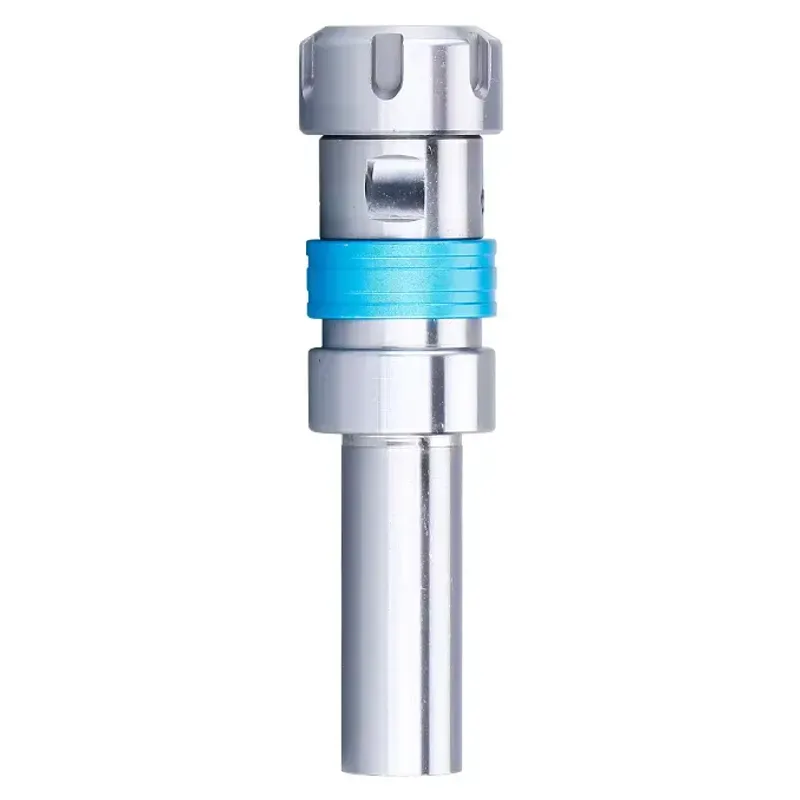 FIG. / PRODUCT VISUAL / 5 VIEWS
Product images are shown for technical review; final compatibility is confirmed before quotation.
TBK-CENTER-SERIES-1601687667145
VER pneumatic floating tapping tool
A pneumatic floating tapping tool recorded at 150 mm overall length, HRC 58–62, 0.05 mm accuracy and manual universal clamping, for lathes and machining centres. The float absorbs the difference between the tap pitch and the machine feed, which is what stops thread pitch damage.
- Overall length150 mm
- HardnessHRC 58–62
- Accuracy0.05 mm
- PowerPneumatic
- Clamping methodManual, universal
| Overall length | 150 mm |
|---|---|
| Hardness | HRC 58–62 |
| Accuracy | 0.05 mm |
| Power | Pneumatic |
| Clamping method | Manual, universal |
| Application | CNC machine tool, machining centre, lathe |
| Material | Steel |
| Type recorded | Live center |
APPLICATION CHECKCNC lathe tailstock and workpiece support applicationsConfirm machine model, interface and drawing before order.
Request this part Ask about an alternativePRODUCT DETAILTECHNICAL INFORMATION
HOW TO READ THE NUMBERSFloating 0.05 mm 150 mm overall
That is the alignment accuracy of the holder. It is looser than a rigid tap holder, and that is deliberate: the float is the feature, not a defect.
Length here is reach. A 150 mm holder lets the tap clear a tall fixture, but every millimetre of overhang adds runout at the tap tip, so keep the extension as short as the part allows.
WHERE IT DOES NOT FIT
A floating holder is for tapping, not for rigid tapping cycles that rely on exact spindle and feed synchronisation, and it is not presented for thread milling. The pneumatic element needs an air supply; pressure is not recorded.
WHAT THIS RECORD ANSWERS
Does it need air to work?
The power field reads pneumatic, so an air supply is implied. The working pressure and consumption are not recorded.
What tap sizes does it take?
Not recorded. Only the overall length and clamping method are stated, so the tap capacity has to be quoted.
Can it be used on a lathe?
Yes, the application field names lathes as well as machining centres.
SPECIFICATION INPUT
Exact fit starts with the machine.
Specifications are listed with the part. Confirm machine model, interface, material and drawing before quotation.
INPUT / 2D + 3D DRAWINGCHECK / INTERFACE + MATERIALOUTPUT / QUOTATION ROUTE