Two accuracy values on one record, normally meaning a standard and a precision grade. An adapter sits in the middle of the chain, so its error adds to the tool's. Choose by the runout the finished cutter needs, not by the sleeve alone.
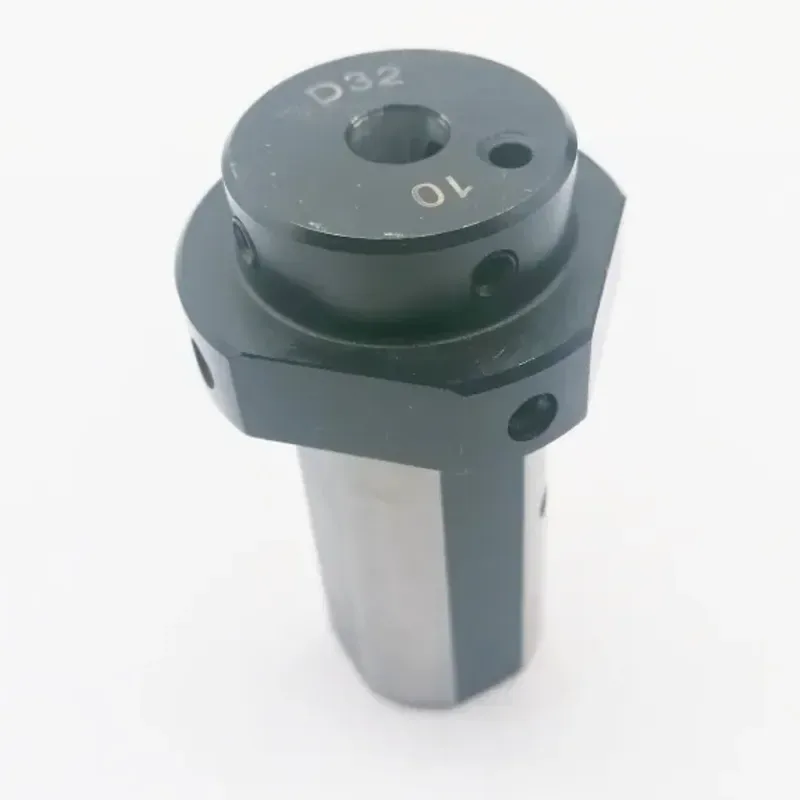 FIG. / PRODUCT VISUAL / 5 VIEWS
Product images are shown for technical review; final compatibility is confirmed before quotation.
TBK-ARB345-1601376446318
Straight-shank adapter sleeve, D16–D60
A straight-shank adapter sleeve in 40CrMo at HRC 50-55 for converting boring-tool shanks on Mazak-style machines, with stated accuracy of 0.015 mm and 0.01 mm, models from D16 to D60 and a coolant-through variant.
- Material40CrMo
- HardnessHRC 50-55
- Accuracy0.015 mm / 0.01 mm (two grades)
- ModelsD16 / D20 / D25 / D32 / D40 / D50 / D60
- Weight1 kg
| Material | 40CrMo |
|---|---|
| Hardness | HRC 50-55 |
| Accuracy | 0.015 mm / 0.01 mm (two grades) |
| Models | D16 / D20 / D25 / D32 / D40 / D50 / D60 |
| Type | Straight-shank adapter, coolant variant |
| Machines | Milling, drilling, turning |
| Weight | 1 kg |
APPLICATION CHECKCNC machining and tool-holder applicationsConfirm machine model, interface and drawing before order.
Request this part Ask about an alternativePRODUCT DETAILTECHNICAL INFORMATION
HOW TO READ THE NUMBERS0.015 mm and 0.01 mm D16–D60 HRC 50-55
Seven outside diameters. The critical point with any adapter is that both ends must pair: the large end meets the machine holder, the small end grips the tool. Checking only one end is how the wrong sleeve gets bought.
Softer than the 56-58 of a holder body. A sleeve does not need that hardness and benefits more from toughness; too hard and it cracks under clamping.
WHERE IT DOES NOT FIT
Adapters correct an interface size; they do not add rigidity. Deflection rises with the cube of overhang, so use the shortest sleeve that reaches. Coolant variants carry internal passages and will leak if connected wrongly.
WHAT THIS RECORD ANSWERS
What accuracy?
The record gives two grades, 0.015 mm and 0.01 mm.
Which sizes?
Seven, from D16 to D60.
Is there a coolant version?
Yes, a coolant type is listed.
SPECIFICATION INPUT
Exact fit starts with the machine.
Specifications are listed with the part. Confirm machine model, interface, material and drawing before quotation.
INPUT / 2D + 3D DRAWINGCHECK / INTERFACE + MATERIALOUTPUT / QUOTATION ROUTE